Background

Showing posts with label holidays. Show all posts

Sunday, December 25, 2011

Word of the week: Schöne Feiertage und einen guten Rutsch!

Schöne Feiertage/Frohes Fest/Frohe Weihnachten und einen guten Rutsch! : Happy Holidays/Merry Christmas and a happy new year!


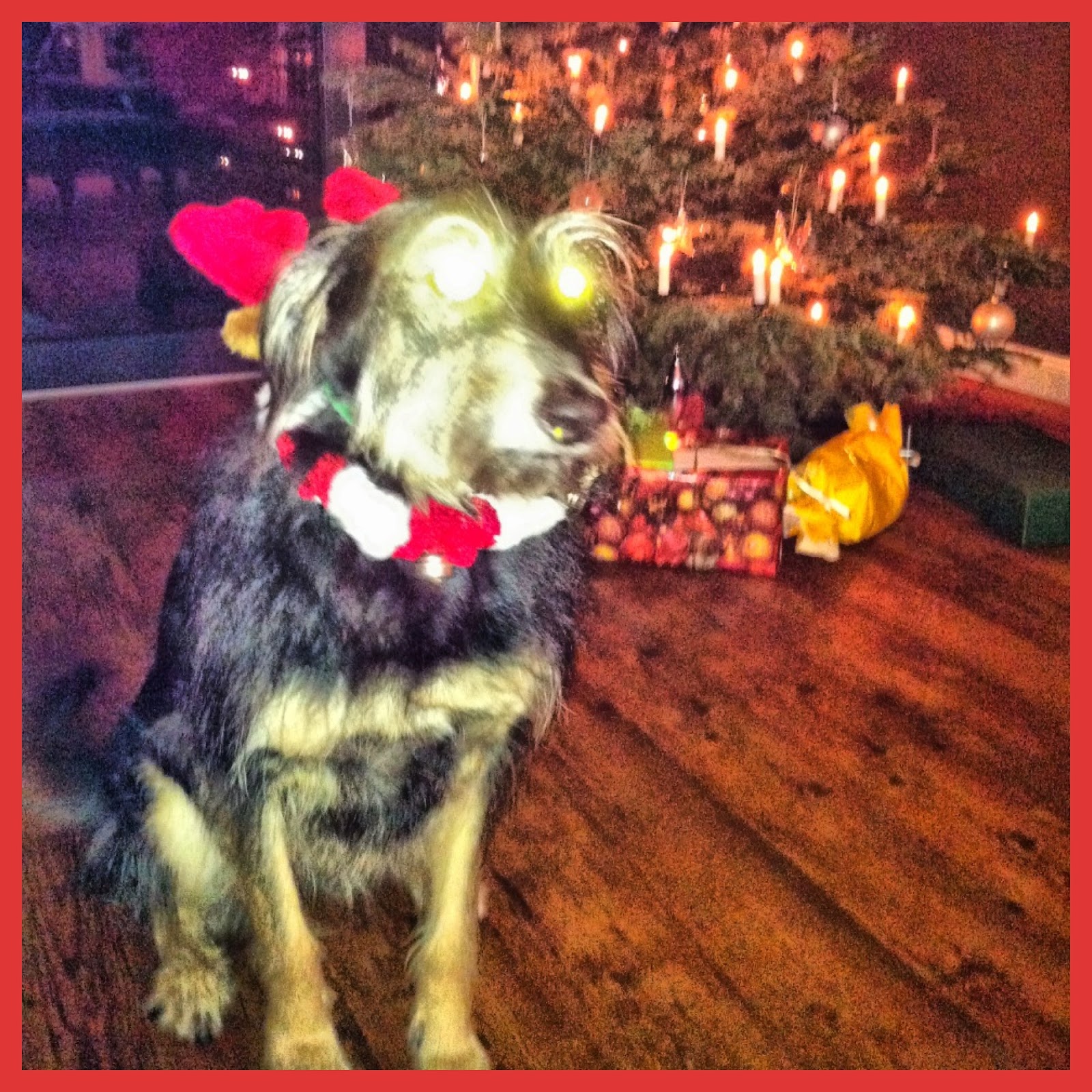
Last night was kind of the main event here. On Heiligabend (Christmas Eve) we traded gifts (Bescherung) and had a lovely meal. In fact here, the 25th and 26th are both part of the Christmas holidays. I've had students and colleagues explain it to me as somewhat necessary as people usually have to visit more than one set of family members and therefore it's easier when there are two holidays for that. This year Christmas happens to fall on a Sunday, which is kind of unfortunate for some who cannot take the week following the holiday off. However, as a teacher I tend to get breaks when students get breaks, so that's kind of nice.

The last few weeks have been relatively busy for me. I am teaching a couple classes at a university. The semester ends in February and I have to prepare the final exams and I've been pretty occupied with that, in addition to other lessons. But as of Friday I submitted everything and now reserve the right to chill for a week until after the new year! At the end of each lesson I had (the last lesson before the break I mean), most would use this expression, "Schöne Feiertage und einen guten Rutsch!" or at least ask me what the equivalent is in English.

If you were to translate literally, guten Rutsch is like have a nice slip, from the verb rutschen (slip, skid). The intended meaning of the expression is that when someone wishes you einen guten Rutsch, they hope that you come safely and happily into the new year. Some claim the word choice of this common holiday expression has to do with the weather, given that in this time of year it can be very cold and icy, hence an increased potential for slipping. So in this case you wish someone a nice slip, one that brings them well into the new year. Others claim the etymology lie
in the wishes of the Jewish New Year Rosch ha-Schana (Hebrew: Head of year) by Yiddish-speaking Jews as "Gut Rosch," which over time was borrowed into German.


In any case, it's a way of wishing a happy new year, which I do to you! Below are just a few pictures from the last week. Enjoy your holiday!


Last day of the Christmas market


Saturday, December 10, 2011

Crowd swimming in the Christmas Market

You knew it was coming, a Christmas market post. Living in Aachen it’s virtually impossible to avoid. In Germany alone there are thousands of Weihnachtsmärkte (Christmas markets), from the larger cities with their respectively larger markets (Munich, Berlin, Cologne), to even the smallest of villages will have some kind of Christmas related event (most commonly in the form of a market). The opening of Christmas markets is somehow connected to Advent; Aachen’s market opened a week before the first day of Advent, and runs until the 23rd of December. Not all markets run that long, or are even open from morning until night.

It’s no wonder Aachen’s market is considered one of the larger. We’re quite close to the border of France, Belgium and the Netherlands; it’s also a popular destination for British people as well. There are of course tourists from all over the world in addition; bringing estimates to 1,5 million visitors per season. Walking around you hear all kinds of languages, and announcements made over the loudspeaker for security are in German, French, English and Dutch. During the day it’s packed with school kids and tourists, and at night it fills further when even the locals come out to meet up with family, friends and co-workers.


With more than 120 Stände (stalls), you can quench any thirst or satiate any holiday cravings. There’s the standard Glühwein, or Lumomba (hot chocolate served with amaretto or Bailey’s). There’s Eierpunsch (I guess something similar to eggnog), there’s even Jägertee (tea served with Jägermeister). If you’re feeling noshy (fun fact: nosh is another German loan word from “noschen” the verb that means the same), there’s no shortage of savory and sweet, whether it’s Pommes frittes (fries), pizza, fish or my personal favorite Rostbratwurst, or Lebkuchen (kind of spicy cake), Pfannkuchen (pancakes filled with your choice of fruit), Crêpes and Waffels, to even cotton candy, licorice, chocolate without end and Gebrannte Mandeln (candied, toasted almonds), you’ll find something to enjoy that quickly becomes a holiday ritual, as reflexive as wearing your winter coat.


If you’re not hungry (or full), you can spend even more time cruising around purchasing a range of decorations and gifts, a lot of which are made locally or at least in Germany. I personally enjoy the woodwork and lace. The air is filled with the sound of a humming crowd sometimes accompanied by a choir singing or musicians playing in the streets, and pathways are warmly lit and trimmed with Christmas plants and almost every shop has Christmas decorations. It is indeed a sight to behold.


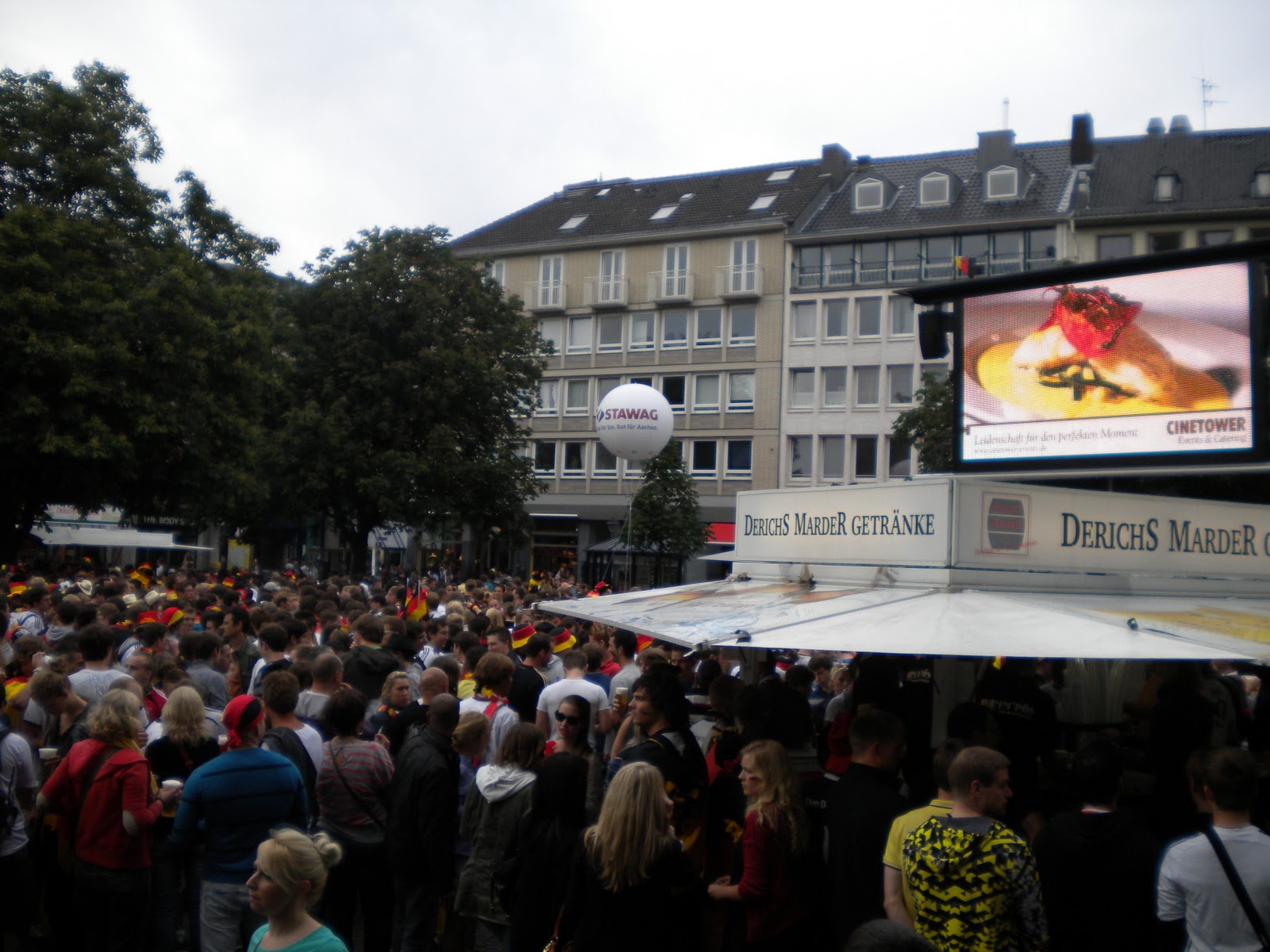
Since Christmas markets are such beloved holiday "musts," it’s almost always packed. If you go on a Friday night for example, it’s a sea of people bustling around. This unavoidable mass (similar in size to public viewing broadcasts of World Cup games) led me to fine tune a skill I’d like to coin as crowd swimming. You’re no doubt familiar with the concept of crowd surfing, which you would do at some kind of performance, where you trust in the sea of people to pass you around much as an ocean moves a surfer on their board. It would obviously be a bit awkward if you tried to crowd surf at a Christmas market, as the crowd isn’t compact and stationary as it is at a concert, but rather alive and flowing much like a body of water. Instead of being transported via the surface water, it becomes necessary to use currents to your advantage in getting you from one stand to the next. You have to hone a kind of tunnel vision, where you know what your desired destination point is, and you can kind of focus in on it, enabling you to see the most direct route and get through the current obstacles as smoothly as possible. Notice I said “current,” as the obstacles are ever changing, one second it’s an elderly couple, the next it’s a pack of school kids, then it’s a crowd of university students (who may or may not be on their way to class/exams), suddenly it’s a mom with her baby and toddler in toe (adorably rugged up for the nippy temperatures), and people snapping pictures at every angle. It’s properly full of people.
So I see the movement therein as similar to this water metaphor in crowd surfing, only instead instead of letting yourself be transported, you’re moving around whatever is in front of you at the moment always with your end point in mind, swooping to the left to allow space for a wheelchair, perhaps a quick pivot to give way to the couple holding hands always looking over your shoulder to locate your partner lest you suddenly find yourself missing your other half and have to “plant,” yourself until you make visual contact again. (First is from a 2010 World Cup public viewing on the market place)


 Another physical capability that must be trained in such crowded events is the ability to transport drinks for a group without spilling. The aforementioned Glühwein is often served in charming little boots. Some stands serve in conventional round mugs, but enough serve the magically warming beverage in these festive boots. Imagine this, you and some friends are meeting up at the market, once everyone has arrived it becomes necessary to purchase the first round. Depending on the skill of the procurer, it may be a 1 or 2 person operation. Once you get to the actual bar, and order your 6 servings, then you have to get back to your posse through the swarm of thirsty visitors that has amassed since you’ve been waiting. You learn to use every centimeter of your foot as you carefully navigate through the huddle (bonus points if there’s snow on the ground). It’s also not unlike when you were a kid and would pour yourself a healthy bowl of cereal filled with milk, those steps from the counter to where you were going to eat were careful and precise. Such is the dexterity required for retrieving a round of this warm treat, keep in mind spilling one creates some kind domino effect where the others tremble sending streams down your fingers, then you’re left with the unfortunate sticky hands/clothes and you may have slopped on another person, a real Christmas market fowl.


(Hexenhof, a crowded Glühwein vendor). Despite the crowds, I still find the Christmas market to be a wonderful place. I enjoy it each year just as much as the last.

Thursday, December 8, 2011

Four weeks of chocolate? I'm in.


It continues to be cold and wintery here. Yesterday there was a hailstorm, which fortunately started five minutes after I got back home from my morning class. One thing I’ve been enjoying lately is a daily treat from my Advent calendar. I was first introduced to this common decorative chocolate vessel when I was in Ireland and I realized it was a better version of an old Christmas decoration that hung in my house each year. Ours was simply a cloth calendar including 24 days (pockets) and a little mouse in a stocking, which you move forward each day. A treasured holiday memory from my childhood is trying each morning to get to the calendar before my sister to move the little mouse its one pocket closer to 24 (truth be told even on the mornings I was too slow I’d still move the mouse back and then forward again). Once I saw this same concept but now with a treat inside for each day I thought, “Score!”

What is an Advent calendar exactly? The Advent tradition is a religious celebration in preparation for the arrival (or “advent”) of the Christ Child (das Christkind) on his “official” birthday, the 25th day of December. The Advent season and its celebration have changed over the years from a more serious, somber character to a more celebratory one, including such treats as these chocolate-filled Advent calendars.


Another version is the Adventskranz, which is a wreath with four candles (one for each week of Advent), where each week (presumably on Sunday) a new candle is lit leading up to the last candle and Christmas. There is also an Advent calendar with small scenes inside each day, leading up to a view of the nativity on the 24th


I knew the holiday season was approaching when I first saw them in supermarkets as early as late October. I was thrilled to receive one when I got back from my vacation just in time to start popping open little boxes of goodies. Off to savor mine now!

Tuesday, December 6, 2011

Word of the week: Nikolaustag


I’m back! It was certainly quite a week for me. There was little pause between the end of my vacation and resuming my workweek, after leaving on Monday night in California and arriving in Germany on Tuesday night, I then worked Wednesday-Friday. Don't feel too bad, I had an awesome vacation and I planned it this way. I must admit my sleep schedule is still a tad off. And just as I predicted, I went from summer dresses and sandals to tights, jeans, long sleeves, sweater, scarf, jacket, hat and gloves, it’s cold here! There’s not a temperature on the week’s forecast above 10°C. But actually, I kind of don’t mind. Autumn was so beautiful and mild and virtually rain-free that it seems about time there be some seasonal weather. Also, given that it is, “the season,” as I predicted upon my return to Germany Christmas is in full swing. Actually it had already begun to swing the weekend we left in late November when the Christmas market opened. Which brings me to today’s word

Der Nikolaustag: St. Nicholas Day

Yes, it’s a holiday here in Germany! I must admit I’ve had to do a bit of sleuthing to figure out exactly what the deal is and found a lot of explanation from another German expatriate blog. By the way, if I misstate any information I welcome enlightenment. I'm still figuring these customs out and in my process hope not to be another case of internet inaccuracy. So (as I understand) the day celebrates Sankt Nikolaus (St. Nicholas), the patron saint of children, sailors, students, teachers and merchants. 


Since his feast day is on the 6th of December it’s no surprise he’s come to have a connection with Christmas. A quick and dirty lowdown, Nikolaus was born in a wealthy city in what is now Turkey some time in the 4th century. Both his parents died when he was young and Nikolaus inherited a lot of riches and animals. Yet he couldn’t seem to be happy without his family. After continuing to grieve day and night he read a scroll that told of the sad life of the poor and seemingly enchanted but somehow empty life of the rich and made the decision to share his wealth with others. So he walked through the town giving his chains and jewels, nuts, fruit even his clothes to others. Eventually he got a donkey sidekick that he’d load up each year on his birthday in his Sunday best and pass out sweets to children.

Germany is almost evenly divided between Catholics and Protestants (along with other religions). When Martin Luther, the great Protestant Reformer came along, he wanted to get rid of the Catholic elements of Christmas. In an effort to diminish the emphasis on Sankt Nikolaus' association with the holiday, Luther introduced der Heilige Christ (later called das Christkindl), an angel-like Christ Child, to bring Christmas gifts. Later this Christkindl figure would be replaced by der Weihnachtsmann (Father Christmas) in Protestant regions and even cross the Atlantic, where Christkindl mutated into the English term “Kris Kringle.” What does Nikolaus do exactly? Well, according to the legend, on the eve of December 5th he goes from house to house bringing small treats and gifts to children. In some places, children leave their shoes by the window or door for Nikolaus, I’ve read that some children even leave wish lists for Sankt Nikolaus to pass on to the Weihnachtsmann for Christmas.

If there’s one thing Germans know how to do it’s Christmas. There are more holiday traditions to discover, I’ll keep you posted. Until then, I’ll just be waiting for the first snow to fall.

Monday, October 31, 2011

Word of the week : Brückentag


Brückentag: long weekend

Happy Halloween to you! Here we're fresh off the time change, which marks the beginning of the "dunkle Jahreszeit," or dark season. Sunday you woke up at your usual time only to find that it's actually an hour earlier than usual. After winding your clocks and watches back, you notice it will start to get dark rather early, as it will be until next year when we change back (or rather, forward).


Regarding last week’s word (Ferien) I mentioned the holidays observed here in (*parts of) Germany and tomorrow is one of them, Allerheiligen or All Saints. Besides a holiday there’s one other thing most people enjoy, a long weekend. There are a couple holidays here in Germany that fall either on a Thursday or Tuesday and a lot of people (myself included) request the work day (Monday or Friday) between a holiday and a weekend day off to form a sort of bridge, if you will (fun fact: Brücke means bridge). Today the streets are a bit more crowded and shops are a bit more full as those who would normally be in the office or on the go have a free weekday to cruise around and enjoy a leisurely stroll through the town. Since tomorrow is an actual holiday (*in NRW) you can bet that most shops will be closed (in fact some of the smaller ones are even closed today), so there’s a bit more action than there usually is on a Monday afternoon.


It happens to also be my personal favorite time of year here in Germany, where all the leaves are beginning to fall. I find the last week of October and beginning of November to be the epitome of Autumn. It’s the golden time, usually lasting three or so weeks, where the weather is crisp, not cold, the hillsides are colorful, not baron, and you actually feel the seasons changing. In a few weeks all the trees will be bare and it will just be that pre-winter period where it gradually gets colder and you’re just kind of waiting for the first snow to fall. But right now is a beautiful time, and I bet some American readers might feel a slight tinge of jealousy knowing that tonight in Germany (well, in most German states anyway), those who do wish to celebrate Halloween will not have to worry about getting up early for work tomorrow.

To close, some pictures of the trees here, because I'm from southern California and palm trees don't change colors so actual Autumn weather, to me, is a beautiful thing.

Have to try the ropes course next time around.


Wednesday, October 26, 2011

Talking about Christmas already?

In the states, the period of time from November until New Year’s day is generally referred to as, “the holidays,” as the year culminates to its ending celebrations including Thanksgiving, Christmas and New Year’s. Most Americans are also aware of the day after Thanksgiving as “black Friday,” which marks the unofficial beginning of the Christmas holidays including massive sales at most retailers beginning as early as four in the morning the day after Thanksgiving. Who among us Americans can't admit to getting up super early to get some deals on Christmas gifts (for others or sometimes even ourselves) at least once? This has almost become a part of, "the holidays," in that the media even covers the event, tracking hourly spending and translating the data into speculations of the country's economic health. This shopathon of a day has nothing to do with death as the color black commonly connotes, but rather with fiscal terms (red=negative black=positive) whereby Americans send a sudden economical surge in the form of gift purchasing. Incidentally, the proximity of Thanksgiving to Christmas is usually a month, but many notice that Christmas decorations and advertisements begin to find their way into storefronts on an increasingly early basis, almost overshadowing Thanksgiving altogether.

I always considered this as merely a product of the consumer-oriented nature of, “the holidays,” that Christmas equals more dollars spent than Thanksgiving, therefore the attention devoted to a holiday in terms of advertisement is somehow correlated to its potential to stimulate the economy. Or is it that people love Christmas time so much that we'd rather think about it for a while longer than just the days leading up to it?

I noticed a sign outside a wine shop when walking today that made me think of this phenomenon. 


It translates: “Remember, Christmas always comes suddenly.” This didn’t seem to be urging one to purchase, but rather, as an observation of sorts that as the daily temperature slowly drops along with the colorful leaves and the year begins to wind down, people everywhere can’t help but think, “Christmas is just around the corner!” How fast a year can pass!

Tuesday, October 25, 2011

Word of the week: Ferien


Ferien: Holidays

Who doesn’t love a holiday? One thing to get used to in a new country is a new set of holidays. Where once I celebrated Labor Day in September, I now observe Tag der Arbeit in May. Back in my school days I looked forward to Spring Break as the bridge between Spring and Summer, now I enjoy the two weeks of Osterferien in April. Thanksgiving, Presidents’ Day, Martin Luther King Jr. Day and Independence Day are now just observed in my mind. But therefore I now have such gems as Tag der Deutsche Einheit, which was last month, and Rosenmontag during Karneval in March, which is the Monday before Ash Wednesday (the beginning of Lent). This holiday isn’t observed in all German states as Karneval isn’t celebrated as much as it is here in the West.


There are also more church holidays here than I was used to in the states. June is a month sprinkled with them. Take for example Himmelfahrt (the Ascension of Jesus), marking Jesus being taken to heaven in his resurrected body. There’s also Pfingstenmontag (Pentecost) commemorating the descent of the Holy Spirit upon the disciples of Christ after the resurrection of Jesus. Even though it’s on a Sunday, the Monday after is considered a holiday. There is also Fronleichnam (Corpus Christi) in late Jun, which
does not commemorate a particular event in Jesus' life but celebrates the body of Christ, consecrated in the mass. It is held on the Thursday after Trinity Sunday. Coming up is Allerheiligen (All Saints Day) in honor of all the saints. Also here Christmas is a two day holiday including the 25th and 26th.


As if the numerous church-related holidays weren’t enough, Germany also has designated Ferienzeiten (holiday periods) throughout the year. If you’re a student (or teacher), then during these times you probably won’t have instruction. If you’re not a student then it’s a period where you can go on holiday. The first time I faced the consequences of Ferienzeiten was when I first moved to Germany last year. I had a temporary permission to reside issued in June valid until September, at which point I had to apply for my residence permit. As I was scrambling to find health insurance, get a letter from the chamber of commerce and somehow manifest enough free-lance contracts to meet the minimum standard of living (without a residence permit [who wants to offer a job to someone with just a temporary visa?], which is actually difficult), it was smack in the middle of Sommerferien, the Summer holidays, which go from the beginning of July and run through August, and sometimes even into September. Good luck trying to get in contact with someone during this period because you’ll likely get an auto email response informing you that they’re on holiday for another three weeks. At the moment there is the Herbstferien (Autumn holidays), which go from the end of October and last until the end of the first week in November. Of course there is also the Weihnachtsferien (Christmas holidays), which go from a few days before Christmas until after the new year.


One thing I do appreciate about holidays in Germany is how it is observed by most work places. On a holiday here the only places that are open are restaurants and cafes-forget trying to buy something in a shop or go grocery shopping, most bakeries and pharmacies are closed and most people have the day off work. I must say at this time of year I’m used to being overrun with Halloween, but here it’s more of a party theme than a holiday (not that it’s a holiday in the states, but it’s certainly celebrated by many).


Since I’ll be taking a little vacation next month (outside of any designated holiday time), I had to rearrange the schedule for one of my classes. We were supposed to have the next two weeks off, but the participants agreed to meet this week so I could have my holiday next month
:-)